Friday, December 18, 2009

Signing off until the New Year


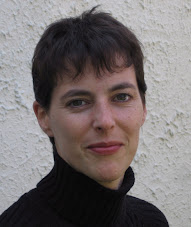
That's me, baking Christmas cookies...I realised a few years ago that I am a bit of a cookie tyrant around this time of the year as the cookies are gifts for the guitar teachers, caregiver etc. My family sometimes ask "can we have one little cookie?" and I glare at them and say: "maybe, once I've made all the gifts, you can have the broken ones." Nice, eh? Now I am aware that this is not a lovely trait of mine. So this year I'm going to make a second batch just for them...

I am taking a few weeks off with my family. I will post again in January (likely January 11th or thereabouts). Thank you for your readership this year. I wish you and your loved ones a peaceful and restful holiday season.

Françoise

Sunday, December 13, 2009

Forced mindfulness…

I have been travelling backwards on a train for the past hour. We were about an hour away from Toronto when something went wrong with the train in front of us. I don’t know the details (as none have been communicated to us) but it means that we have had to travel backwards and now have to wait to connect with the broken train and tow them all the way to Toronto. This, we were told, is going to take “a very long time”. Since then, we have gone backwards, forward, backwards again for long stretches of time.

This means that I have missed my connecting train and that every minute that goes by, I am travelling further and further away from my destination.

Now this is a good time to be mindful! One of my best friends has told me that I am “the queen of the positive reframe” and she wasn’t feeling warm and fuzzy when she said it, as she felt very irritated by a contretemps we were experiencing and I was telling her "look on the bright side, at least we don't have to climb THAT hill over there!."

So, here is the positive reframe, (Just for you, Mary, ☺). Five good things about this mishap:

1) No one is waiting for me at the station if and when I arrive so I'm not putting anyone else out.
2) One of my dearest friends gave me a cd for my birthday with 89 songs on it, many from our days as punk rockers in Montreal. So I’m having a very enjoyable walk down memory lane. (Thank you Jimmy!)
3) I could be on the other train, the broken one, where there has been no heat and no washrooms for the past hour and a half...
4) I could have two toddlers with me
5) It might turn out that I am sitting on my connecting train as this train changes identity once it gets to Toronto. Which will mean I have not missed my connection at all.

Plus, what the heck can I do and what is the point of making it a miserable time for myself?

So there you go, that’s my positive reframe. Talk to me again in a couple of hours and see if I’m still feeling perky.

Friday, December 11, 2009

Upcoming Training in Markham and London: Special Rates for Children's Mental Health Staff

Safeguards Training for Children and Adult Services is sponsoring four of my Compassion Fatigue workshops this Winter: Two in Markham and two in London. If you are a member of CMHO, OARTY, ONTCHILD/YPRO, ANCFSAO or Community Living Ontario, the price of these workshops is extremely low.

In addition, a non-sponsored version of these training sessions are being offered in Kingston. Visit my website for more details.

Walking the Walk: Creative Tools for Transforming Compassion Fatigue

January 18, 2010 - Holiday Inn & Suites, Toronto (Markham)
or
March 29, 2010 - Delta London Armouries, London, On.

Description
Françoise Mathieu, M.Ed., CCC.Certified Counsellor, Compassion Fatigue Specialist and Director of WHP will present this one day training (this will be followed by the Trainer-the-Trainer session so you can take this valuable training back to your agency.)

Compassion fatigue is characterized by deep emotional and physical exhaustion and by a shift in a helping professional's sense of hope and optimism about the future and the value of their work. It has been called "a disorder that affects those who do their work well" (Figley 1995). The level of compassion fatigue a helper experiences can ebb and flow from one day to the next, and even very healthy helpers with optimal life/work balance and self care strategies can experience a higher than normal level of compassion fatigue when they are overloaded, are working with a lot of traumatic content, or find their case load suddenly heavy with clients who are all chronically in crisis.

Compassion fatigue is a normal consequence of working in the helping field. The best strategy to address compassion fatigue is to develop excellent self care strategies, as well as an early warning system that lets the helper know that they are moving into the caution zone of Compassion Fatigue. This is a highly interactive one day workshop, incorporating a combination of solo, small group and whole group activities.

Registration Details & Fee(s):
Members: Training Fee: $0 plus $50 Admin Fee+GST
Non Members: Training Fee: $99 plus $50 Admin Fee+GST

To register click here

Compassion Fatigue Train the Trainer: 2 day course

January 19-20, 2010 - Holiday Inn & Suites, Markham
or
March 30-31, 2010 - Delta London Armouries, London

Description
Françoise Mathieu, M.Ed., CCC.Certified Counsellor, Compassion Fatigue Specialist and Director of WHP has designed a two day, intensive train-the-trainer retreat on Compassion Fatigue.

This train the trainer workshop offers tools, handouts, strategies, training material and marketing strategies to adapt Walking the Walk to your agency's specific needs (and to your own presentation style).

The train the trainer workshop is designed to take you deep first, to gain a true and thorough understanding of your own relationship to CF. Then you will learn the didactic details (what to teach, how to teach) and finally talk about the mechanics of the whole process (how to customize this for your own work needs/goals etc.).

Spaces limited to a maximum of 20 participants.Certificates of Completion will be provided

PREREQUISITES**
Prior attendance to the full day or half day workshop Walking the Walk is required. (You may have attended a session at your workplace, or in a different community in the recent past). For those who have not attended this workshop in the past, Walking the Walk will be offered on the day prior to this training. If you have attended Walking the Walk at an earlier date, please indicate when that was on your registration form.

Outcomes
You will Learn:
·How to use the Compassion Fatigue Workbook
·What are Compassion Fatigue, Caregiver Stress, Vicarious Traumatization and burnout
·Signs and symptoms of CF/VT/Burnout
· Assessment tools
· Warning signs
· Resiliency skills
· Self Care Strategies
· Academy of traumatology standards of Ethics
· How to offer psychoeducation on this topic
· Experiential activities that work with audiences
· How to design your own workshop: what is your target audience

Pricing
Member fee $52.50
Non-member fee $260.40

To register click here

For more information contact:
Contact Name: Donna Stevens
Contact Phone: (905) 889-5030
Contact Fax: (905) 889-7155
Contact Email: donna@safeguards-training.net

Sunday, December 6, 2009

A One Day Workshop with Gabor Maté: Exploring the mind-body-emotional connection and the impact of stress on the immune system


Gabor Maté's workshop in Toronto last week attracted so much interest that the location had to be changed: Within days of posting the event, five hundred participants had signed up. The organisers had to scramble and find a new location for the event and settled on a movie theatre. I was a bit sceptical when I settled myself in for the talk: there were no visual aids, just a gaunt man dressed in black standing at the front of the theatre with a few newspaper clippings in his hands. And then, the day began and I lost track of everyone else in the room. Dr Maté is a gifted and riveting speaker.

Instead of trying to explain his message in my own words, here is an excerpt from his website which describes the message in the book and in his workshop:

"Can a person literally die of loneliness? Is there a connection between the ability to express emotions and Alzheimer's disease? Is there such a thing as a "cancer personality"? Questions such as these have long surrounded an often controversial debate regarding the connection between the mind and the body in illness and health. As ongoing research is revealing, repressed emotions can frequently lead to stress—which, in turn, can lead to disease.

Provocative and beautifully written, When the Body Says No provides the answers to these and other important questions about the effects of stress on health. In clear, easy-to-follow language, Dr. Gabor Maté lucidly summarizes the latest scientific findings about the role that stress and individual emotional makeup play in an array of diseases, including heart disease, diabetes, irritable bowel syndrome, multiple sclerosis, arthritis, cancer, and ALS, among others.

Offering profound insights into the link between emotions and disease, When the Body Says No explores the highly debated effects of stress on health—particularly of the hidden stresses we all generate from our early programming. Dr. Gabor Maté explains how, when the mindbody connection is not optimal, various illnesses can crop up—everything from heart disease and eczema to irritable bowel syndrome and ALS. He presents the scientific evidence that a connection exists between the mind and the immune system—along with illuminating case studies from his years as a family practitioner that reveal how one’s psychological state before the onset of disease may influence its course and final outcome.

As Dr. Maté wrote in The Globe and Mail: “When we have been prevented from learning how to say no, our bodies may end up saying it for us.” When emotions are repressed, this inhibition disarms the body’s defenses against illness. And, in some people, these defenses go awry, destroying the body rather than protecting it. Despite a rapidly accumulating body of evidence attesting to the mind-body unity, most physicians continue to treat physical symptoms rather than persons. When The Body Says No argues persuasively that we must begin to understand the mindbody link in order to learn more about ourselves and take as active a role as possible in our overall health.

Dr. Maté explains how the dynamics of self-repression operate in all of us. With the help of dozens of moving and enlightening case studies and vignettes drawn from his two decades as a family practitioner, he provides poignant insights into how disease is often the body's way of saying "no" to what the mind cannot or will not acknowledge.

Above all, When the Body Says No promotes learning and healing and helps improve physical and emotional self-awareness—which, Dr. Maté asserts, is at the root of much of the stress that chronically debilitates health and prepares the ground for disease."
from www.whenthebodysaysno.ca.

Dr Maté will be returning to Toronto for an encore in June.

**Addenda: I have just received the flyer for Dr Maté's next presentations: June 28th 2010 at the AGO in Toronto and June 29th at the Cinémathèque in Montreal. For more information visit the Hinks Dellcrest Centre.

Tuesday, December 1, 2009

Organizational Health: The Place to Start

I am posting a bit late this week - I was in Toronto yesterday, attending Dr. Gabor Maté's workshop on stress. I will write more on this later as it was a very rich day of learning and Dr Maté deserves his very own post.

Last week, I had the privilege of sharing the podium with Dr David Kuhl at a conference hosted by the Elizabeth Bruyere Continuing Care Centre in Ottawa. Dr Kuhl is both a physician and a psychologist and he is the director of the Centre of Practitioner Renewal (CPR) at Providence Care in Vancouver. The CPR was created several years ago to offer support to staff members of the hospitals of the Providence Care network. At the CPR, Dr Kuhl and his colleagues offer counselling and education to health care workers and carry out research related to compassion fatigue and helper wellness. They work with individuals and also with entire teams to try and improve staff relationships and enhance the quality of care.

Dr Kuhl is a very erudite and skillful presenter and his session was inspiring and illuminating. I really appreciated the focus he puts on teams and the challenges they are facing in health care.

Conference participants had many questions for us about organizational challenges and expressed their frustration at the current state of affairs in health care. Their anger and exasperation towards the system was expressed strongly throughout the day. This is not an isolated case: I have the opportunity to meet hundreds of health care professionals each month from across the country and the evidence is overwhelming: physicians, nurses, allied health professionals and hospital managers are struggling. Health care workers all over Canada describe having to do more with less resources and trying to deliver quality of care when staffing has been cut beyond what is realistic. Last week, one nurse told me about mandatory overtime where nurses are not allowed to say no when the hospital calls. She talked about nurses who work in remote communities who get a knock at their door when they don't answer their phone - in order to force them to come to work.

Taking a step back, how can quality patient care be delivered when you have been coerced to come to work for an additional shift? It simply does not make sense.

What happens, of course, is that we all suffer, patients and health care workers alike: we turn on our colleagues, we resent any extra time off they take (I call it the "must be nice phenomenon"), we blame our managers whom, we feel, "don't understand". Perhaps that is sometimes true, but I meet with different managers weekly and they say they feel like "the peanut butter in the sandwich", squeezed between upper management, ministry demands, staff needs and concerns and patient care. A very difficult position.

So, what to do about all this? Sometimes we can try going the advocacy route, protesting to the upper echelon in various ways, not voting for a government that doesn't value health care workers (and also doesn't believe in a restorative justice system, but I digress). But sometimes we feel that we do not have a voice. We feel stuck.

In my opinion, to find our voice within this deeply flawed system, we need to gain a better understanding of organizational health. This is what my esteemed colleague Dr Pat Fisher does. Dr Fisher is an organizational psychologist as well as a trauma specialist and she has spent the last two decades working within our system. She has developed an approach to diagnosing and enhancing organizational health and the results are very convincing: a year after her interventions, agencies report a significant improvement in decreased absenteeism, productivity, decreased job stress and employee wellness. Pat has developed the 4 tier, 12 factor model of organizational health. I invite you to go read more on her important work.

Sunday, November 22, 2009

Clean Slate

Not by my own choosing, mind you, but my computer crashed last weekend. It was kaput, finito, dead as a doornail. Apparently the hard drive was damaged and "could have gone at any moment" said the repair person. The good news is that I have been pretty good about backing up my files (not perfect, though and not unlike a break-in, it's only weeks later that you think "where's that thing? I haven't seen it in ages" only to realise it was part of what went missing.) But I'm in pretty good shape, all things considered.

So, for those of you who are lackadaisical about backing up your files, a word to the wise. My computer savvy hubby says we should all back up our computers every single night at the end of a day's work. He also recommends using gmail as an email server, as it will store both received and sent mail from your computer and you will never again lose your sent mails (which is a big issue for me as it is where I do the bulk of my work). I am sure some things will fall through the cracks though, so if you emailed me recently and have not heard back from you, can you write again? Thanks and sorry in advance.

Last week was rather training-intense, with two half day sessions with oncology and palliative care staff in Montreal, and three days with York Region's community and health services. I had a lot of fun. I enjoy meeting new people and hearing about the work that they do, with its challenges and rewards and pitfalls along the way. I particularly appreciated the training space at York Region's Newmarket site. When you do a lot of training, you become pretty attuned to group dynamics and the impact that a training space has on people who are, after all, kind of trapped together for a whole day. This space had a ton of natural light (big windows), high ceilings, carpet on the floor (good acoustics), comfortable chairs and enough space to move around. It really makes a difference to the whole experience. Thank you to Nancy Hogue for driving me all over the GTA and not laughing at my geographical dismay!

Now I am back in quiet little Kingston where driving my boys to the football game took approximately 1.5 minute (go gaels go) and getting front row seats to the santa claus parade meant arriving 5 minutes early and sitting in a local restaurant with front row (warm) seats for the show. I cannot say enough about the quality of life offered by living in a small community.

On the menu this week: The two day Compassion Fatigue Train the Trainer workshop (if you are interested in attending this training down the road, please visit my website and also note that there are only 20 seats per session and that this course fills up very quickly) I will not be offering a June session this year as I cannot get the training space that I want, so after the March session, I will likely not be offering this course again until the Fall. I am then going to Elizabeth Bruyere in Ottawa for a palliative care conference.

Have a great week, don't forget to tell your computer that you love it, and after giving it a big wet kiss, back it up right away.

Saturday, November 14, 2009

November is always a hectic month

Hi, how are you? Have you started your Christmas shopping yet? :-)

I had a very interesting week and had the pleasure of presenting at the stunning Dundurn Castle in Hamilton to professionals working in developmental pediatrics at Hamilton Health Sciences and in the community. Thank you for your warm hospitality and for tolerating my big booboo at the train station (basically I made someone wait for me for 1.5 hours due to a comedy of errors...so sorry...)

The week ahead is a busy one: I will be presenting at the CHUM in Montreal on Tuesday, working with health care staff from palliative care and oncology. Then, it's off to Newmarket to work with Ontario Works staff from York Region, for three days of training. Next week is the two day Compassion Fatigue Train the trainer back home in Kingston. For those of you who may be interested in attending the next Train the Trainer, which is being held in March, please note that there are only 20 spots available and that registrations are coming in fairly steadily, therefore to avoid disappointment, please consider registering soon. Please also note that from March onwards, there will be a prerequisite to attend the Train the Trainer workshop: you must have completed a full day or half day "Walking the Walk" session at some point in the past or simply attend the one day training being offered on the day prior to the Train the Trainer session. For more information click here.

Something new: I will be offering an e-learning session for a private group in a couple of weeks via a process called Fireside Chat: it's a very simple and affordable process whereby participants use their laptop and a phone line to take part in a teleconference while being able to view the power point slides. If I like it, I might use this to start offering some distance learning sessions in the new year.

I am changing decades in two weeks. Gulp.

Finally, if you are building a christmas wish list for yourself, I would like to recommend some good old standbys from my library:

Take time for your life by Cheryl Richardson
Mindfulness-based stress reduction cd package by Jon Kabat-Zinn
50 ways to simplify your life by Patrick Fanning

In peace,

Françoise